Proper PairingsWellness Within

Aromatherapy

The quiet language of plants.

Educational reference on essential oils — their history, traditional uses, and current evidence. Not intended to encourage unsupervised use inside correctional facilities.

Reference library

Eight foundational oils

Read at your own pace. Each entry is a starting point, not a prescription.

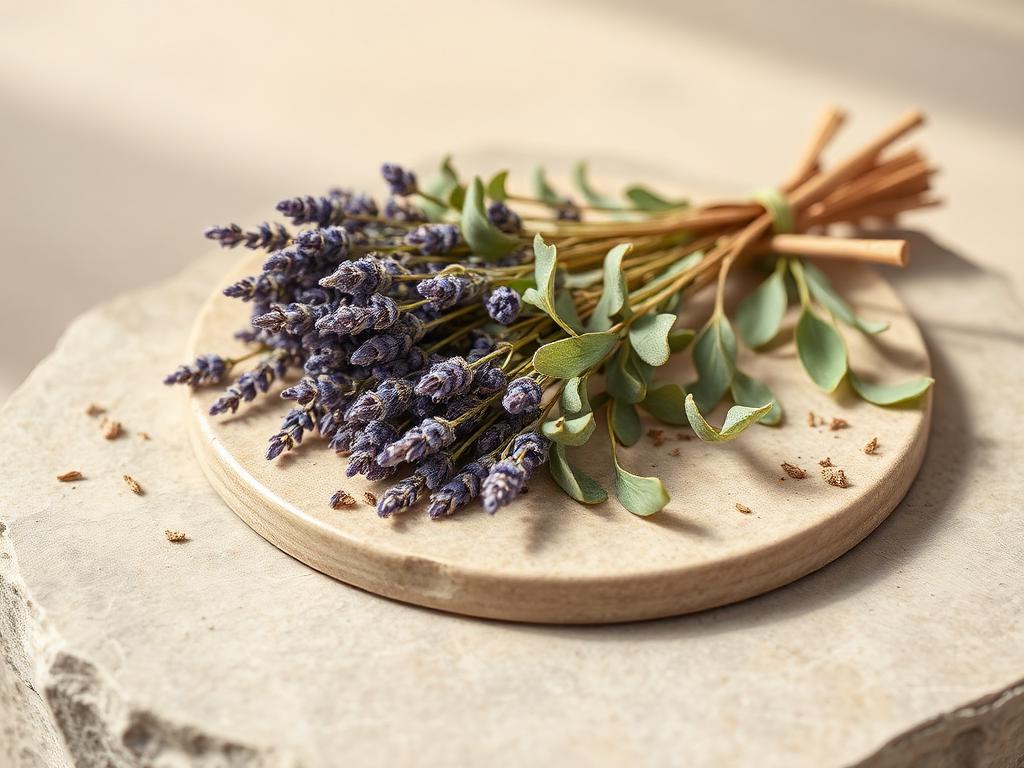
Lavender

Lavandula angustifolia

  • Calming
  • Sleep support
  • Eases tension
History
Cultivated for over 2,500 years across the Mediterranean; used by Roman bathers, medieval monks, and Victorian nurses.
Research
Multiple randomized trials suggest inhaled lavender may reduce state anxiety in pre-procedural settings and improve subjective sleep quality.
Traditional use
Sachets under pillows, warm compresses, ambient diffusion in rest spaces.
Safety
Generally recognized as safe by inhalation. Undiluted topical use may irritate sensitive skin.

Frankincense

Boswellia carterii

  • Grounding
  • Focus
  • Deep breath
History
One of the oldest traded resins in the world — used in Egyptian, Jewish, Christian, and Islamic ritual for millennia.
Research
Preliminary studies point to boswellic acids as anti-inflammatory. Aromatic use is studied for meditative attention.
Traditional use
Burned as resin during prayer and contemplation; diffused during meditation.
Safety
Well tolerated by inhalation. Consult a clinician for internal use.

Geranium

Pelargonium graveolens

  • Mood balance
  • Softens grief
  • Uplifting
History
Distilled in Réunion and Egypt since the 19th century; a signature note in classical French perfumery.
Research
Small trials on menopausal and perimenopausal populations suggest mood-elevating effects when inhaled.
Traditional use
Skin oils and floral waters; diffused in shared spaces to lift low mood.
Safety
Generally safe. Dilute for topical use; avoid during first trimester of pregnancy.

Myrrh

Commiphora myrrha

  • Reflection
  • Warmth
  • Steady presence
History
Named in the Ebers Papyrus (1550 BCE); central to funerary rites and healing traditions across the ancient Near East.
Research
In-vitro work supports antimicrobial activity. Aromatic use is studied as a companion to reflective practice.
Traditional use
Blended with frankincense in temple incense; used in ceremonial anointing oils.
Safety
Safe by inhalation. Avoid internal use without professional guidance.

Bergamot

Citrus bergamia

  • Bright mood
  • Eases stress
  • Refreshing
History
Cultivated in Calabria, Italy since the 18th century — the defining top note of Earl Grey tea and Eau de Cologne.
Research
Randomized trials in mental-health day programs report lower state anxiety with 15 minutes of bergamot inhalation.
Traditional use
Diffused in waiting rooms; added to warm baths and hand-massage blends.
Safety
Cold-pressed bergamot is photosensitizing on skin. Choose bergaptene-free (FCF) for topical use.

Sweet Orange

Citrus sinensis

  • Uplifting
  • Warmth
  • Welcoming
History
One of the most widely produced essential oils in the world; a mainstay of pediatric and eldercare aromatherapy.
Research
Studies in dental and pre-operative waiting areas report lower reported anxiety with ambient orange diffusion.
Traditional use
Ambient diffusion in shared spaces; added to natural cleaning routines.
Safety
Very well tolerated. Mild photosensitivity possible with high topical concentrations.

Vetiver

Chrysopogon zizanioides

  • Grounding
  • Sleep depth
  • Steadies the nervous system
History
Known as the ‘oil of tranquility’ in Ayurvedic tradition; woven into cooling mats in South India for centuries.
Research
Emerging work on attentional regulation and sleep architecture in small samples.
Traditional use
Blended with lavender for evening practice; woven into fabric for cooling and grounding.
Safety
Very safe. Deep, earthy aroma — a little goes a long way.

Cedarwood

Cedrus atlantica

  • Steadiness
  • Restful sleep
  • Sense of shelter
History
Referenced in ancient Egyptian embalming and Solomon’s temple construction; a signature scent of North African cedars.
Research
Cedrol (a component) has been investigated for sedative-like properties in animal models.
Traditional use
Wardrobes and libraries lined with cedar; diffused in evening rest routines.
Safety
Safe by inhalation. Dilute for topical use.

This content is educational. It does not constitute medical advice and is not intended for unsupervised topical or internal use, especially in secure environments. Consult a qualified clinician before beginning any new practice.